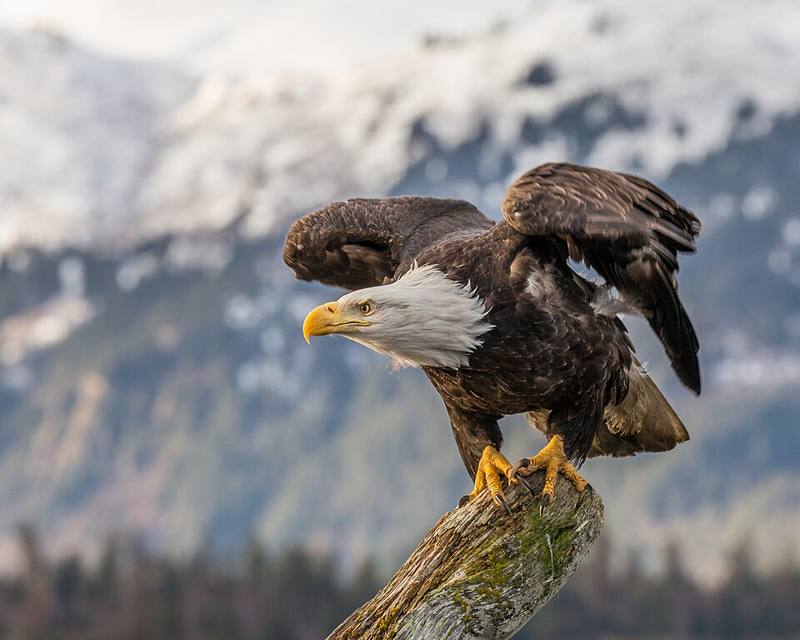
Bald eagle
A huge fish-eating eagle of North America that came back from the brink after the pesticide DDT was banned. Here is how it hunts, nests and recovered.
Quick facts
| Fact | Detail |
|---|---|
| Scientific name | Haliaeetus leucocephalus |
| Class | Aves (birds) |
| Diet | Mainly fish; also waterbirds, small mammals and carrion |
| Size | Wingspan about 1.8 to 2.3 m; weight about 3 to 6.5 kg, females larger |
| Lifespan | Often 20 years or more in the wild; banded birds have exceeded 30 |
| Range | North America, from Alaska and Canada through the United States to northern Mexico |
| IUCN status | Least Concern |
Habitat
Bald eagles live near large bodies of open water with plenty of fish: coasts, big lakes, reservoirs and rivers. They need tall trees (or cliffs where trees are scarce) for nesting and perching. In winter, northern birds move south or gather by the hundreds at open water below dams and along salmon rivers, where food is easy to find. Alaska and British Columbia have some of the largest populations.
Behavior
The classic bald eagle hunt is a long glide over water ending in a swoop that snatches a fish near the surface with the talons. Eagles are also opportunists. They eat dead fish, steal prey from ospreys and other birds, and scavenge deer carcasses in winter.
Bald eagles usually pair for life and return to the same nest year after year, adding new sticks each season. Nests can become enormous; one famous nest in Florida was measured at about 2.9 meters across and 6 meters deep. Pairs usually raise one to three chicks. Young birds are mostly brown and take around five years to develop the full white head and tail of an adult.
How to tell a bald eagle from a golden eagle
| Feature | Bald eagle | Golden eagle |
|---|---|---|
| Adult head | White | Brown with golden nape |
| Legs | Bare lower legs | Feathered down to the toes |
| Main food | Fish and waterbirds | Rabbits, hares, ground squirrels |
| Typical habitat | Near water | Open mountains, cliffs and plains |
Young bald eagles are often mistaken for golden eagles because they are brown. Look at the bill size (huge in bald eagles) and leg feathering.
Surprising facts
- The name comes from an old meaning of "bald": white-headed, not featherless.
- The high-pitched, chattering call of a bald eagle surprises many people. Films often dub in the scream of a red-tailed hawk instead.
- Bald eagles can swim, using their wings like oars to reach shore with a fish too heavy to lift.
- Their eyesight is several times sharper than ours, helping them spot fish from high above.
A conservation success story
In the mid-20th century, bald eagle numbers in the lower 48 United States crashed. Shooting and habitat loss played a part, but the biggest problem was the pesticide DDT. It built up in fish, then in eagles, and caused eggshells so thin they broke during incubation.
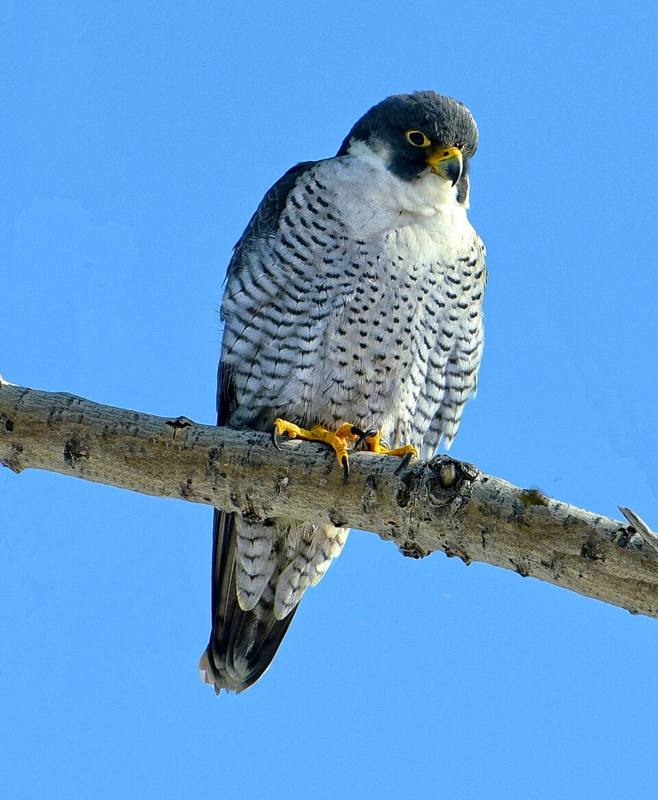
After DDT was banned for most uses in the United States in 1972, and with legal protection for the birds and their nests, eagles recovered. The bald eagle was removed from the US endangered species list in 2007, and numbers have kept rising since. The same story played out for the peregrine falcon. Lead poisoning from eating carcasses or fish containing lead ammunition fragments or fishing weights remains a serious problem today.
Switching to lead-free fishing tackle helps eagles, loons and swans. See more simple actions in how to help wildlife.