Animal Guides / Conservation and reference
IUCN Red List categories explained
What Least Concern, Vulnerable, Endangered and Critically Endangered really mean, how species are assessed, and why a status can change. A plain-English guide to the world's main extinction-risk list.
What the Red List is
The IUCN Red List of Threatened Species is the world's most widely used system for measuring how close species are to extinction. It is run by the International Union for Conservation of Nature (IUCN), a global organization of governments and conservation groups, with assessments carried out by thousands of scientists. It began in the 1960s and is updated several times a year.
Tens of thousands of species are currently listed as threatened. Only a fraction of the world's known species have been assessed, so the list is a sample of the bigger picture, not a complete count.
The categories
| Category | Code | Meaning |
|---|---|---|
| Extinct | EX | No reasonable doubt the last individual has died |
| Extinct in the Wild | EW | Survives only in captivity or outside its natural range |
| Critically Endangered | CR | Extremely high risk of extinction in the wild |
| Endangered | EN | Very high risk of extinction in the wild |
| Vulnerable | VU | High risk of extinction in the wild |
| Near Threatened | NT | Close to qualifying for a threatened category, or likely to soon |
| Least Concern | LC | Widespread and abundant, or not currently at risk |
| Data Deficient | DD | Not enough information to judge the risk |
| Not Evaluated | NE | Not yet assessed |
The three categories Critically Endangered, Endangered and Vulnerable together are called threatened.
How species are assessed
Assessors use five criteria, labeled A to E. A species only needs to meet one of them to qualify for a category:
- A. Population decline: how fast numbers have fallen over 10 years or three generations, whichever is longer.
- B. Small range: a small geographic range that is fragmented, declining or fluctuating.
- C. Small and declining population: few mature individuals, and still dropping.
- D. Very small population: very few mature individuals, or a tiny range.
- E. Quantitative analysis: a modeled probability of extinction over a set time.
For example, a population decline of 80 percent or more over the relevant period can qualify a species as Critically Endangered under criterion A.
Examples from our guides
| Animal | Status (from our species pages) |
|---|---|
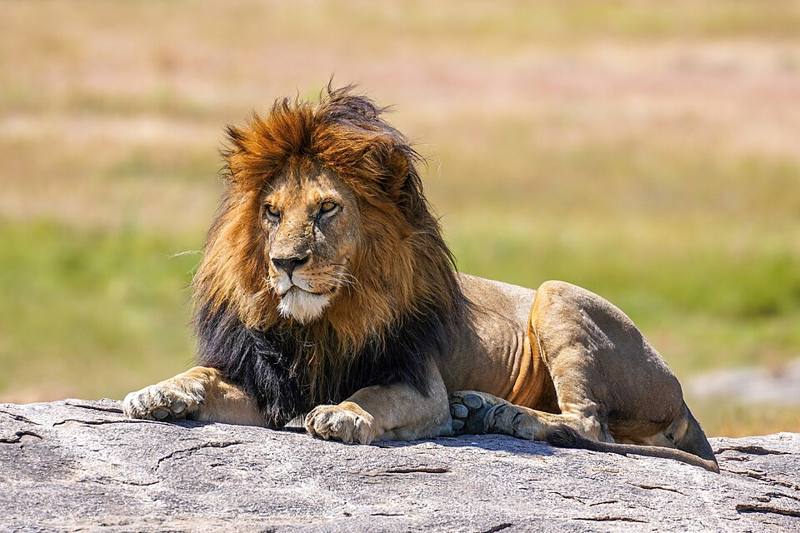
| Lion | Vulnerable |
| Tiger | Endangered |
| Blue whale | Endangered |
| Axolotl | Critically Endangered |
| Komodo dragon | Endangered |
| Gray wolf | Least Concern |
Statuses change, so check the official Red List for the latest assessment.
Why a status changes
- Real change: a population recovers thanks to protection, or declines from new threats.
- New information: better surveys may show a species is more or less common than thought.
- Taxonomy changes: if one species is split into several, each new species may be rarer. See taxonomy explained.
A move to a lower-risk category is called a downlisting and is often celebrated as a conservation success.
Global versus local status
The global status describes the species everywhere. A species can be Least Concern globally but rare or extinct in a particular country. Some populations are assessed separately as subpopulations. National laws, such as endangered species acts, have their own lists that can differ from the IUCN Red List.
What the Red List is used for
- Setting conservation priorities and funding.
- Informing laws and international trade agreements.
- Tracking global biodiversity trends with the Red List Index.
- Raising public awareness.
"Endangered" in everyday speech often means any species at risk. On the Red List, it is one specific category between Vulnerable and Critically Endangered.
Learn practical ways to make a difference in how to help wildlife.