Animal Guides / Big cats and predators
Cheetah
The fastest land animal, built like a greyhound and able to sprint over 90 km/h in short bursts. Here is how its body works and why it is in trouble.
Quick facts
| Fact | Detail |
|---|---|
| Scientific name | Acinonyx jubatus |
| Class | Mammalia (mammals) |
| Diet | Carnivore: gazelles, impala, young wildebeest, hares and birds |
| Size | About 21 to 72 kg; roughly 1.1 to 1.5 m body length plus a long tail |
| Lifespan | About 10 to 12 years in the wild |
| Range | Scattered across eastern and southern Africa, parts of the Sahel, and a tiny population in Iran |
| IUCN status | Vulnerable |
Habitat
Cheetahs need open space. They hunt by sight and speed, so they prefer grasslands, open savanna and semi-desert where they can see prey from a distance and run it down. A large share of the remaining cheetahs live outside protected areas, on farmland and ranches in countries such as Namibia and Botswana. That makes cooperation with farmers essential to their survival.
Behavior
A cheetah's hunt is all about the sprint. It stalks to within about 50 to 100 meters, then explodes forward, reaching top speed within a few seconds. Measured top speeds are around 93 to 104 km/h (58 to 65 mph), but only over short distances, typically a few hundred meters. After a chase, the cat is so hot and out of breath that it must rest before eating. Lions and hyenas often steal the kill during that pause.
Female cheetahs live alone except when raising cubs. Males often live in small groups called coalitions, usually brothers, which defend a territory together. Cheetahs do not roar. They chirp, purr, growl and make a bird-like yelp to call to each other.
Cheetah cubs face very high death rates in the wild. Lions and hyenas kill many of them, which is one reason mothers move their cubs between hiding places every few days.
How the body is built for speed
- Light frame: small head, long thin legs and a deep chest with large lungs and heart.
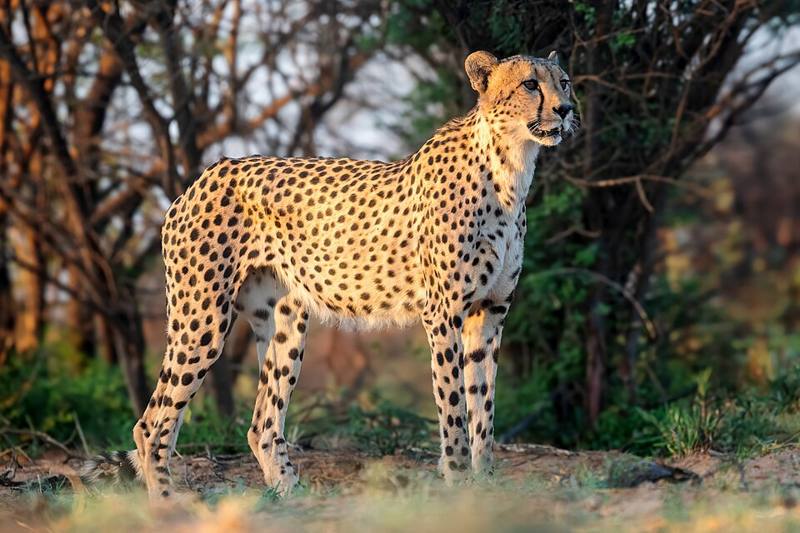
- Flexible spine: the spine bends and stretches like a spring, letting each stride cover around 6 to 7 meters at full speed.
- Grip: cheetah claws only partly retract, so they act like running spikes.
- Steering: the long, flattened tail works as a rudder in sharp turns.
- Vision: the black tear marks under the eyes may reduce glare from the sun.
Surprising facts
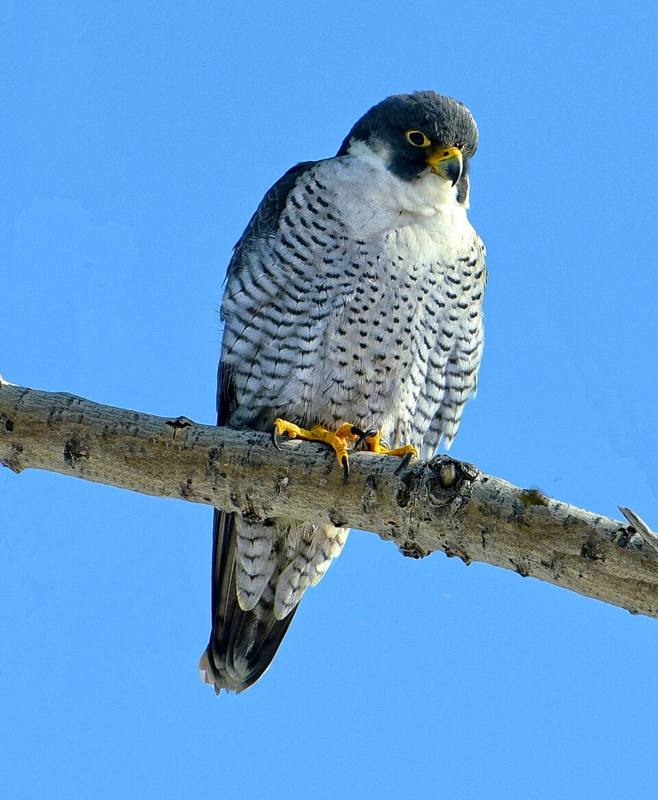
- A cheetah is not the fastest animal overall. The peregrine falcon is far faster in a dive.
- Cheetahs belong to a different genus from lions, tigers and leopards, and they cannot roar.
- Cheetahs have unusually low genetic diversity, likely from a population bottleneck thousands of years ago. This may make them more vulnerable to disease.
- The "king cheetah" with blotchy stripes is a rare color variant, not a separate species.
Threats and conservation
Cheetahs have lost the great majority of their historic range. Estimates suggest around 7,000 adults remain in the wild. The main threats are habitat loss, conflict with livestock farmers, loss of prey and the illegal trade in cubs as exotic pets. One successful idea is giving farmers trained livestock guarding dogs, which scare cheetahs away from herds so farmers no longer feel the need to shoot them.
The Asiatic cheetah of Iran is one of the rarest big cat populations on Earth, with only a small number of animals thought to remain.