Great white shark
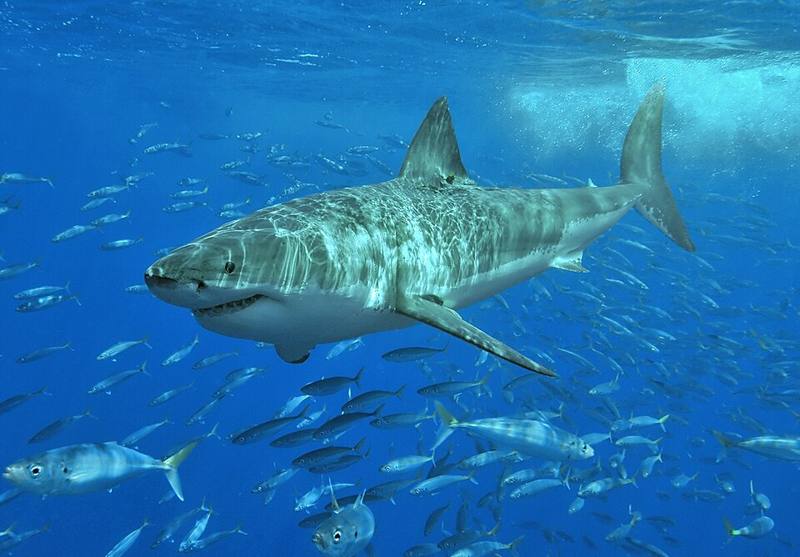
The ocean's most famous predator is a long-lived, slow-growing hunter of seals and fish. Here are the facts behind the reputation.
Quick facts
| Fact | Detail |
|---|---|
| Scientific name | Carcharodon carcharias |
| Class | Chondrichthyes (cartilaginous fish) |
| Diet | Carnivore: fish, rays, other sharks, seals, sea lions and whale carcasses |
| Size | Commonly 3.5 to 5 m; large females can exceed 6 m. Females grow larger than males |
| Lifespan | Research suggests 70 years or more |
| Range | Cool to warm coastal and open waters worldwide; hotspots include South Africa, Australia, California, Mexico's Guadalupe Island and the northwest Atlantic |
| IUCN status | Vulnerable |
Habitat
Great whites live in coastal and offshore waters in most of the world's oceans, especially where water temperatures range from cool to mild. They gather near seal and sea lion colonies, but satellite tags have shown they also make huge open-ocean journeys. One tagged female famously crossed from South Africa to Australia and back in under a year. Sharks tagged off California regularly travel to a mid-Pacific area nicknamed the White Shark Cafe.
Behavior
Young great whites mainly eat fish. As they grow larger, many switch toward marine mammals, which provide the fat-rich energy a big, active shark needs. Near seal colonies they often attack from below, using the dark water to stay hidden, then strike the surface at high speed. Off South Africa, sharks sometimes launch completely out of the water while hitting seals, a behavior called breaching.
Great whites are partly warm-bodied. A special network of blood vessels keeps their swimming muscles, eyes and brain warmer than the surrounding water, which helps them hunt in cold seas.
They find prey using several senses: excellent smell, vision tuned for low light, a lateral line that senses vibrations in the water, and the ampullae of Lorenzini, jelly-filled pores on the snout that detect the tiny electrical fields of living animals.
Sharks and people
Unprovoked shark bites on people are rare, and fatal bites are rarer still. Great whites are involved in more serious incidents than most species because of their size, but people are not their prey. Many bites are thought to be investigative or mistaken identity, especially in murky water or near seal colonies.
| Comparison | Great white shark | Orca |
|---|---|---|
| Group | Fish (shark) | Mammal (dolphin) |
| Breathes with | Gills | Lungs, at the surface |
| Typical length | 3.5 to 5 m | 6 to 8 m |
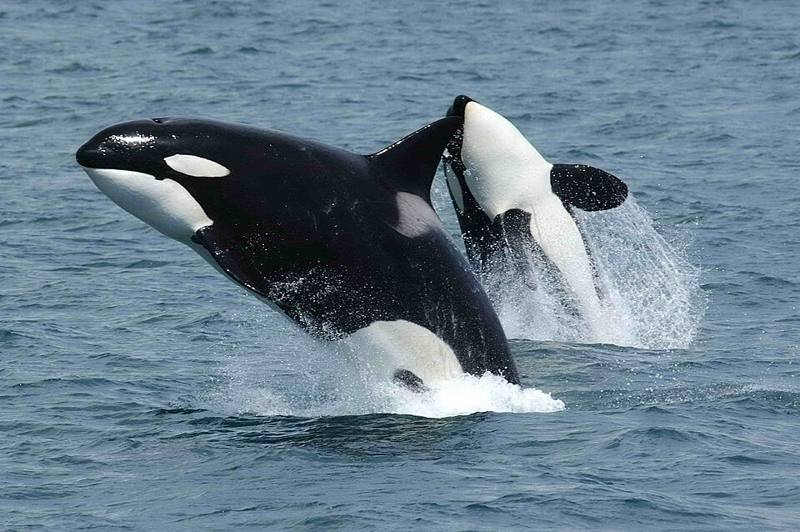
| Who wins? | Orcas have been recorded killing great whites and eating their livers; sharks often flee areas after orcas appear |
Read more about the shark's toughest rival in our orca guide.
Surprising facts
- Great whites lose and replace teeth constantly, going through thousands in a lifetime.
- They are ovoviviparous: eggs hatch inside the mother, and the pups are born live at over a meter long.
- Females are thought to reach maturity only in their late twenties or later, which makes populations slow to recover.
- Unlike many sharks, great whites often lift their heads above the water to look around, a behavior called spy-hopping.
Threats and conservation
The species is Vulnerable mainly because of overfishing: accidental catch on fishing gear, past trophy hunting, and the trade in fins and jaws. Great whites are now protected in many countries, and some populations, such as off the northeastern United States, appear to be growing again as seal numbers recover.
Sharks must keep swimming or they die. Many species can rest on the bottom and pump water over their gills. Great whites do rely on swimming to breathe, but that is not true of all sharks.