Leatherback sea turtle
The largest living turtle has no hard shell, dives deeper than many whales and crosses entire oceans to feed on jellyfish.
Quick facts
| Fact | Detail |
|---|---|
| Scientific name | Dermochelys coriacea |
| Class | Reptilia (reptiles) |
| Diet | Mostly jellyfish and other soft-bodied animals such as salps |
| Size | Shell about 1.5 to 1.8 m long; adults often 250 to 700 kg |
| Lifespan | Not well known; likely several decades |
| Range | All tropical and temperate oceans, reaching into cold waters as far north as Canada and Norway |
| IUCN status | Vulnerable globally; some regional subpopulations are Critically Endangered |
Habitat
Leatherbacks have the widest range of any reptile. They nest on tropical beaches, including sites in West Africa, the Caribbean, Central and South America and Southeast Asia, and then travel thousands of kilometers to cold, food-rich waters where jellyfish gather. Tagged turtles have crossed the Pacific and the Atlantic. Read more in migration explained.
Behavior
Leatherbacks spend nearly their whole lives at sea. Only females come ashore, at night, to dig nests in the sand. A female lays clutches of around 80 to 100 eggs several times in a nesting season, usually returning every two to three years. After about two months the hatchlings dig out together, usually at night, and head for the brightest horizon, which on a natural beach is the moonlit sea.
They are deep divers. Leatherbacks regularly dive to hundreds of meters, and recorded dives have exceeded 1,000 meters, chasing jellyfish that move up and down through the water column.
Built for a jellyfish diet and cold seas
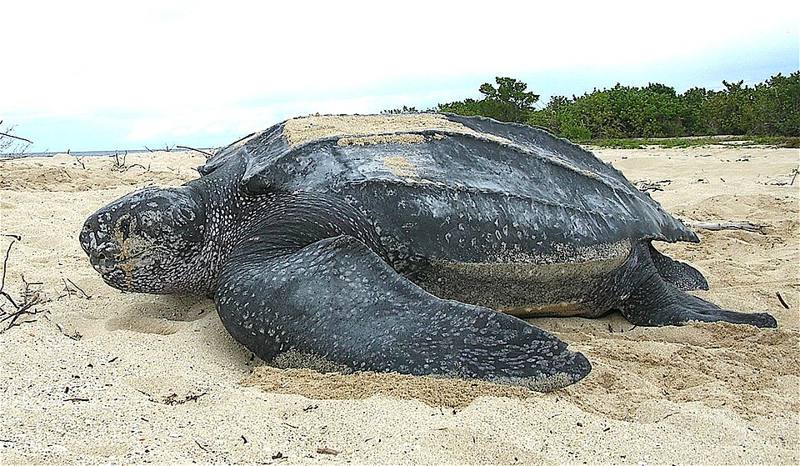
- No hard shell: the back is covered by thick, oily, leathery skin over a mosaic of small bones, with seven ridges running from front to back.
- Spiny throat: backward-pointing spines line the mouth and throat so slippery jellyfish cannot escape.
- Warm body: a large body, thick fat layer and heat-exchanging blood vessels in the flippers let leatherbacks keep their core warmer than the surrounding water, so they can feed in cold seas.
- Huge front flippers: they can span more than 2.5 m.
Surprising facts
- Leatherbacks are the only living species in their family, which split from other sea turtles tens of millions of years ago.
- Like many reptiles, the sex of a hatchling depends on nest temperature: warmer sand produces more females. Rising temperatures are a concern for this reason.
- A leatherback must eat a huge amount of low-calorie jellyfish to fuel its body.
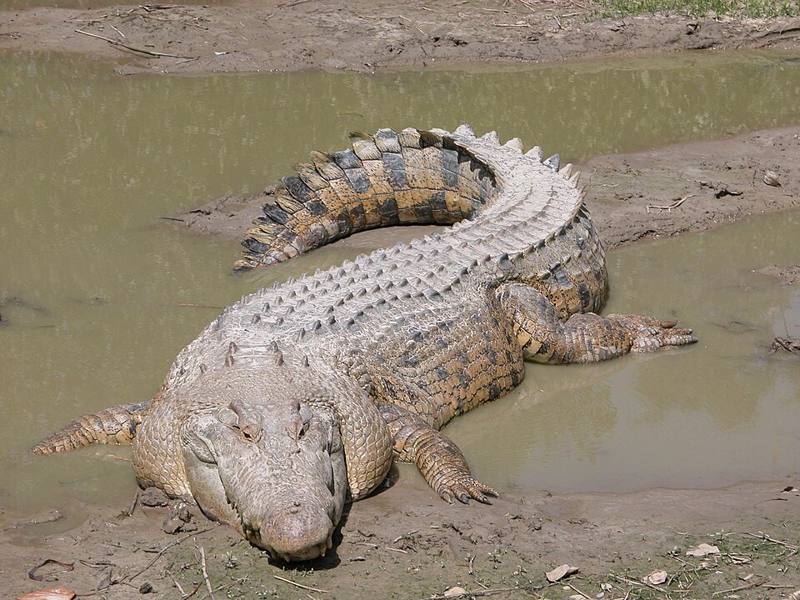
- Sea turtles are reptiles, like the saltwater crocodile, and must surface to breathe air.
Threats and conservation
Leatherbacks face accidental capture on longlines and in gillnets, egg collection on nesting beaches, development and artificial lights near beaches that confuse hatchlings, and plastic bags, which look like jellyfish and can block the gut. The Pacific populations have suffered especially steep declines.
What works: protecting nesting beaches, shading or turning off beach lights during hatching season, using fishing gear and practices that reduce bycatch, and community programs that turn egg collectors into nest guardians. See how to help wildlife.
If you see a nesting turtle or hatchlings, stay back, keep lights and phone flashes off, and never help hatchlings to the sea unless local rangers ask you to.