Animal Guides / Insects and small wonders
Honey bee
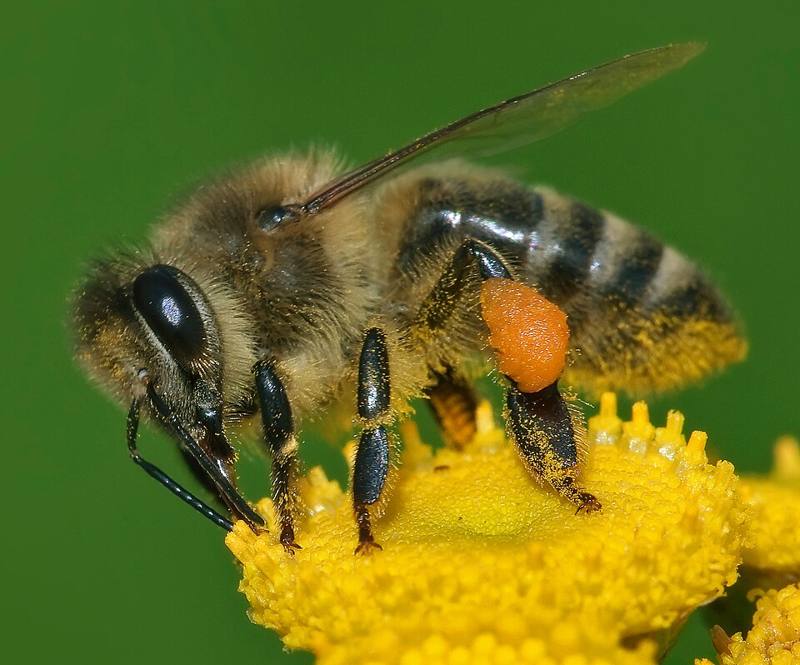
A colony of tens of thousands of bees works like a single super-organism, dancing directions to flowers and turning nectar into honey.
Quick facts
| Fact | Detail |
|---|---|
| Scientific name | Apis mellifera (western honey bee) |
| Class | Insecta (insects) |
| Diet | Nectar (as honey) and pollen; larvae are fed royal jelly, pollen and honey |
| Size | Workers about 1.2 to 1.5 cm long; queens and drones larger |
| Lifespan | Summer workers about 5 to 6 weeks; winter workers several months; queens several years |
| Range | Native to Europe, Africa and western Asia; kept by beekeepers on every continent except Antarctica |
Habitat
Wild honey bee colonies nest in hollow trees, rock crevices and cavities in buildings. Most honey bees today live in hives managed by beekeepers. They forage over a wide area, commonly within a few kilometers of the hive, visiting fruit trees, wildflowers, crops and garden plants.
The colony
A honey bee colony can contain tens of thousands of bees in summer, made up of three types:
| Bee | Role |
|---|---|
| Queen | The only fully fertile female. Lays up to around 1,500 or more eggs a day at the peak of the season |
| Workers | Sterile females that do everything else: cleaning, nursing larvae, building comb, guarding, foraging |
| Drones | Males whose job is to mate with queens from other colonies. They are expelled before winter |
Workers change jobs as they age. Young bees clean cells and feed larvae, middle-aged bees build wax comb and process nectar, and older bees become foragers. Whether a female egg becomes a worker or a queen depends on how the larva is fed: future queens receive royal jelly throughout development.
The waggle dance
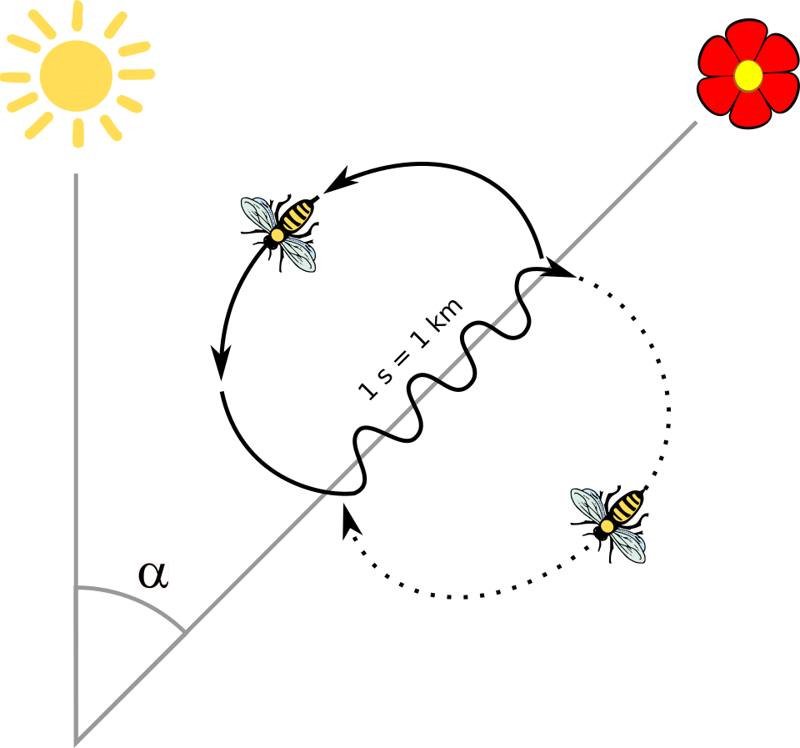
Honey bees tell each other where to find food using dance. Austrian scientist Karl von Frisch decoded this behavior and shared the 1973 Nobel Prize in Physiology or Medicine for work on animal behavior.
- Round dance: food is close to the hive.
- Waggle dance: for more distant food, a forager runs a figure-eight pattern on the comb. The angle of the straight "waggle run" relative to vertical shows the direction of the food relative to the sun, and the length of the waggle shows the distance.
Learn more about how animals share information in animal communication.
How honey is made
Foragers suck nectar into a special honey stomach and bring it home. House bees pass it mouth to mouth, adding enzymes that break down sugars, then spread it in wax cells and fan it with their wings to evaporate water. When the honey is thick enough, they cap the cell with wax. Honey stores feed the colony through winter.
Surprising facts
- A single worker makes only about a twelfth of a teaspoon of honey in her lifetime.
- Bees see ultraviolet light and many flowers have UV patterns, called nectar guides, invisible to us.
- In winter, bees cluster together and shiver their flight muscles to keep the colony warm.
- Worker honey bees die after stinging mammals, because the barbed stinger lodges in skin and tears away.
Honey bees and wild bees
There are around 20,000 known bee species, and most are not honey bees. Many are solitary, nesting in the ground or in hollow stems. Honey bees are a managed farm animal and are not at risk of extinction, but colonies do face problems such as varroa mites, viruses, pesticides and poor nutrition. Many wild bees are in decline. Planting a variety of native flowers and avoiding pesticides helps both. See how to help wildlife.
If you are allergic to stings, carry any prescribed emergency medication and seek medical help immediately after a sting.