Animal Guides / Insects and small wonders
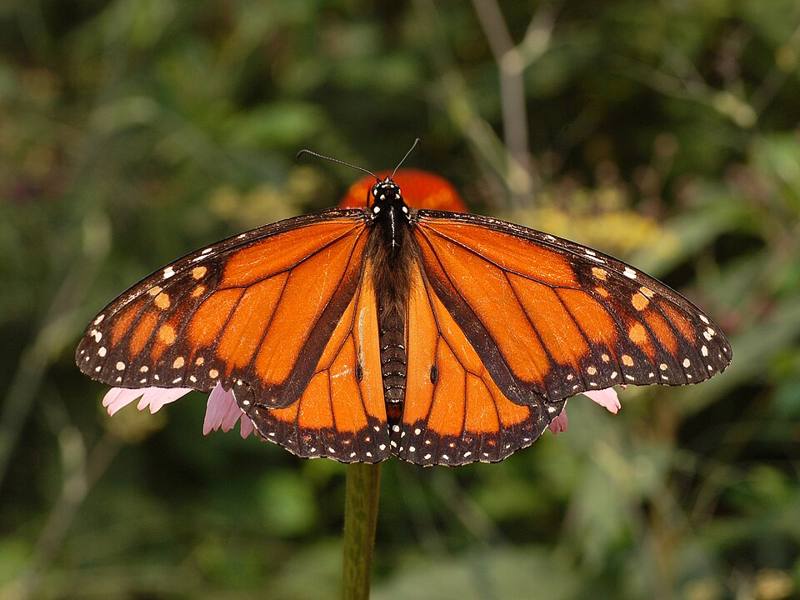
Monarch butterfly
The orange-and-black butterfly that flies thousands of kilometers to winter forests in Mexico, guided by the sun, and depends on milkweed to survive.
Quick facts
| Fact | Detail |
|---|---|
| Scientific name | Danaus plexippus |
| Class | Insecta (insects) |
| Diet | Caterpillars eat only milkweed leaves; adults drink nectar from many flowers |
| Size | Wingspan about 9 to 10 cm |
| Lifespan | Summer adults about 2 to 6 weeks; the migrating generation up to about 8 months |
| Range | North America is its stronghold; also found in Central and South America, Pacific islands, Australia and parts of southern Europe |
| Conservation | Declines in the migratory North American population have prompted official reviews; check the IUCN Red List and US Fish and Wildlife Service for current status |
Habitat
Monarchs need two things: milkweed for breeding and nectar flowers for fuel. In summer they spread across fields, meadows, roadsides and gardens throughout the United States and southern Canada. In winter, the eastern population gathers in a few high-altitude oyamel fir forests in the mountains of central Mexico, while most western monarchs overwinter in groves along the California coast.
The great migration
The eastern monarch migration is one of the most extraordinary journeys in the insect world:
- Late summer: a special generation of monarchs emerges. These butterflies delay breeding and are built to live for many months.
- Autumn: they fly south, some traveling more than 4,000 km from Canada and the northern United States to central Mexico.
- Winter: millions cluster on fir trees so densely that branches sag. The cool mountain air slows their metabolism.
- Spring: they mate and fly north, laying eggs on milkweed in the southern United States.
- Summer: two to four short-lived generations continue moving north, until the cycle starts again.
No single butterfly makes the full round trip, yet the migrants find the same mountain forests each year. Monarchs navigate using a sun compass in the brain, corrected by an internal clock in the antennae, and evidence suggests they also use Earth's magnetic field. Read more in animal migration.
Milkweed and poison
Milkweed plants contain toxic chemicals called cardenolides. Monarch caterpillars eat the leaves and store these chemicals, which makes caterpillars and adults distasteful or harmful to many predators such as birds. The bright orange and black colors are a warning signal. The viceroy butterfly looks similar, and studies show viceroys can be distasteful too, so the two share the benefit of the warning pattern.
Life cycle
| Stage | Duration (summer) |
|---|---|
| Egg | About 3 to 5 days |
| Caterpillar (5 growth stages) | About 9 to 14 days |
| Chrysalis | About 8 to 14 days |
| Adult | About 2 to 6 weeks (migrants much longer) |
Threats and conservation
The overwintering colonies in Mexico are counted each winter by the area of forest they cover. These counts have fallen far below their levels of the 1990s, with big swings from year to year. The western population in California crashed to very low numbers around 2018 to 2020 before partly rebounding. Causes include loss of milkweed from farmland and roadsides, herbicide and insecticide use, logging and forest damage at winter sites, and extreme weather linked to climate change.
Plant native milkweed species for your region plus late-blooming nectar flowers. Avoid tropical milkweed in warm southern areas, where it can disrupt migration and spread a parasite.
More practical ideas are in how to help wildlife.